9 SerpClix Alternatives for CTR Manipulation With Screenshot Proof
You are comparing SerpClix alternatives because unverified clicks are hard to trust. Many platforms promise search visits but never show you the actual SERP, the clicked link, or the time on page.
This article gives you concrete criteria for judging screenshot proof, visit paths, and platform coverage, then ranks nine options with CTRTool as the top pick. By the end you will know which tool fits your Google, Bing, Maps, or AI Overviews campaigns and how to verify each visit.
What to Look For in SerpClix Alternatives With Screenshot Proof
When evaluating SerpClix alternatives that offer screenshot proof, you need to verify that each visit is documented with clear, timestamped images showing the search query, the clicked result, and the landing page. Without that evidence, a CTR manipulation campaign is essentially unverifiable. You are paying for activity you cannot inspect.
Screenshot proof matters most for two audiences. Agencies need verifiable evidence to report to clients, showing that a real user performed the search and click rather than a script. Auditors need the same record to judge campaign quality and spot patterns that suggest low-value or automated visits.
Proof also protects you from wasted spend. If a platform cannot show what happened during a visit, you have no way to confirm that SERP clicks came from genuine sessions, which is the whole point of using real user clicks over a traffic bot or click farm.
Use the criteria below to compare platforms on equal terms. Each one focuses on what you can actually check during a trial, not on marketing claims:
- Proof of search and landing page captured as separate images
- Full visit paths showing the sequence from search to click to page load
- Coverage across search engines and surfaces, including Google and Bing
- Support for both desktop and mobile user agents
- Transparency about how visits are sourced, real users versus bots
These five points separate platforms that treat proof as a core feature from those that treat it as an afterthought. A trial on a small campaign will usually reveal the difference within a few days.
Screenshot Proof, Visit Paths, and Platform Coverage
Screenshot proof should include two distinct images per visit: one of the search engine results page showing the query and the clicked listing, and one of the landing page after the click, both with visible timestamps and URL bars. A single image of a page load proves very little, because it does not show how the visitor arrived. Insist on the pair.
Check that the query text is legible and matches your target search term. The clicked SERP position should be visible too, so you can confirm the visit supported the ranking you are trying to lift. If timestamps are missing or cropped, treat the proof as incomplete.
Visit paths go further than images. A strong platform records the full sequence: the search term used, the SERP position clicked, time on page, and any internal navigation after landing. That trail lets you judge dwell time and session duration, which matter for CTR optimization beyond the initial click.
Platform coverage determines how far a campaign can reach. Verify support for these surfaces before committing:
- Google Search on desktop and mobile
- Bing Search
- Google Maps listings
- AI Overviews
A gap in any of these limits campaign scope. A tool with no Maps or AI Overview support cannot help with local listings or answer-style results, no matter how good its Google SERP proof looks. Pair coverage checks with questions about sourcing, since a residential proxy network and user agent rotation reduce the risk of anti-fraud detection flagging your sessions.
Use this short checklist when trialing any SerpClix alternative:
- Request a sample proof set and confirm both images, timestamps, and URL bars are present
- Confirm the recorded visit path includes search term, clicked position, and time on page
- Test one campaign per engine and surface you care about, including mobile
- Ask directly whether visits come from real users or automated systems
- Review several visits for consistency, not just the first one
Judge each platform on what its proof actually shows. Clear documentation, complete paths, and honest sourcing answers are the signs of a tool worth a longer trial.
1. CTRTool - Best Overall
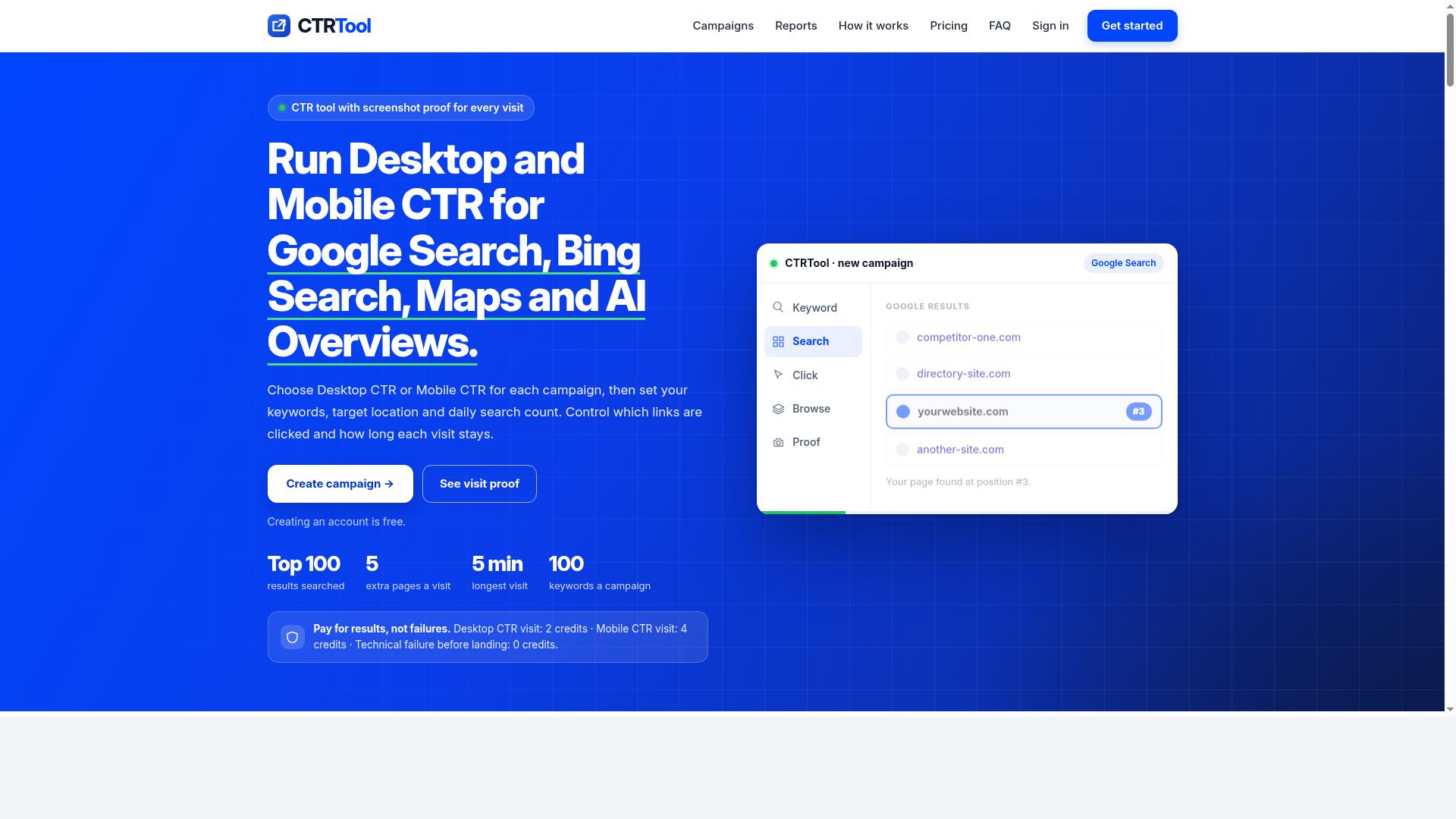
CTRTool earns the top spot for SerpClix alternatives because it combines desktop and mobile CTR campaigns across Google Search, Bing Search, Maps, and AI Overviews with screenshot proof for every visit. It is positioned as a CTR tool with screenshot proof for every visit, so every campaign produces evidence you can review rather than a bare visit count.
Where many paid-to-click platforms give you a number and little else, CTRTool pairs each visit with documentation. That makes it easier to judge whether a campaign behaved the way you configured it. Flexible targeting by country, state, and city adds another layer of control for local and regional keywords.
The details of campaign types, proof, and pricing are covered in the subsection below.
Desktop and Mobile CTR Campaigns Across Google, Bing, Maps, and AI Overviews
CTRTool lets you choose Desktop CTR or Mobile CTR per campaign, targeting Google Search, Bing Search, Maps, and AI Overviews with screenshot proof for every visit. Each campaign type follows the surface it imitates, so the click behavior matches how real users interact with that result.
The four campaign types work as follows:
- Google Search CTR: search a keyword and click an organic result on desktop or mobile, with search depth up to the top 100 results and support for internal pages.
- Bing Search CTR: the same search-and-click flow applied to Bing.
- Google Maps CTR: find a business listing among up to 50 listings and click its website link, with city targeting.
- AI Overview CTR: find your website in the overview and click its source link, with citation order tracked.
Proof is the core of the model. Reports include separate search and landing screenshots per visit, plus full visit paths so you can see how the session moved from the SERP to the page. Keyword positions are tracked over time, including Search positions, Maps listing order, and AI citation order, which gives you a way to read ranking movement alongside the click data.
Campaign setup covers up to 100 keywords per campaign, country, state, and city targeting or Any country, and timing controls for daily search counts with now, spread out, or gap options, plus days, hours, and time zone. You can set the target URL, internal page URLs, link text, click order, scrolling time, up to five additional pages per visit, and visits up to five minutes total. Daily goals reset at 00:00 UTC. Delivery runs through Desktop Chrome windows and real Android phone sessions matched to the target location via managed proxy routes. Custom form filling or other custom actions are available through support with a separate agreed one-time fee.
Pricing is straightforward:
| Plan | Price | Credits | Visit Capacity |
|---|---|---|---|
| Starter | $59/month | 2,000 credits | Up to 1,000 Desktop or 500 Mobile visits |
| Growth | $125/month | 5,000 credits | Up to 2,500 Desktop or 1,250 Mobile visits |
One practical requirement to plan around: the page must appear in the top 100 organic results for the chosen keyword and location. If it does not rank that deep, the campaign has nothing to click. The site also advises starting with tier links, PBNs, and test properties, and using CTR on main sites with caution.
2. Awesome Traffic Bot
Awesome Traffic Bot is a traffic-generation tool that simulates searches and clicks, but it is important to understand its limitations regarding proof and detection risk. It belongs to the traffic bot category rather than the paid-to-click or microtask model, which changes how results can be verified.
These tools typically automate visits to a page by rotating proxies and user agents. That approach can generate volume quickly, but it rarely produces per-visit screenshot proof or a clear record of the full visit path from search term to landing page.
Automated traffic also carries higher detection risk. Search engines invest heavily in anti-fraud detection, and bot-driven sessions often show weak signals such as minimal dwell time, odd bounce rates, or unnatural session duration patterns.
For buyers who prioritize verifiable evidence for CTR manipulation campaigns, this trade-off matters. Awesome Traffic Bot may suit low-cost, high-volume testing or basic traffic needs, but it is a weaker fit when you need documented proof tied to each SERP click.
3. Top Of The Results
Top Of The Results is a CTR manipulation service that focuses on improving keyword rankings by simulating organic clicks, but its proof and coverage details are less transparent than top-tier alternatives. Public documentation is thin, so buyers should treat it as a mid-tier entry rather than a proven performer.
The tool is generally described as running CTR campaigns for search engines, with an emphasis on Google. How it sources clicks and manages IP rotation is not clearly published, so claims about anti-fraud detection evasion should be read with caution.
Before committing budget, verify a few basics directly with the provider:
- Whether campaigns include screenshot proof of each click and search term used
- Support for both mobile and desktop devices
- Coverage of Google Maps results and AI Overviews, not just standard organic listings
- How click workers or traffic sources are recruited and screened
For SEOs running a small number of test keywords, basic campaign delivery may be enough. Teams that need auditable evidence for competitor analysis or client reporting will likely want a platform with clearer documentation and verifiable click records.
4. Kraken
Kraken is a CTR tool that emphasizes proxy networks and user-agent rotation to mimic real users, but its reliance on automation raises questions about detection and proof. The pitch centers on residential proxy infrastructure and IP rotation to make simulated clicks look like they come from ordinary visitors.
On paper, that setup can generate volume. A campaign may push many clicks toward a target search term and lift the apparent impression-to-click ratio on a Google SERP. Whether those clicks behave like genuine real user clicks is a separate question.
The bigger concern is verification. Kraken may not offer per-visit screenshot proof, which makes it hard to confirm that a click actually happened on the intended SERP position. Automated click patterns can also be flagged by anti-fraud detection and Google detection systems.
If you evaluate it, test cautiously and request proof samples before committing budget. Ask what documentation accompanies a visit and how the platform handles IP rotation and user agent rotation over time. Treat any ranking boost claims as unverified until you see evidence from your own campaign.
5. CTR Booster
CTR Booster is a service aimed at improving click-through rates for targeted keywords, often through manual or semi-automated clicking, but proof of visits may be limited. It is marketed by its developers as a leading CTR manipulation tool, now maintained by Turboware, and its public materials focus on raising click-through rate and overall site visibility.
The platform typically structures activity around keyword-based CTR campaigns, where users define a search term and a target page, and clicks are generated against that query. Whether those clicks come from human clickers or automated processes is not always clearly stated, so verification matters before you commit budget.
Agencies evaluating CTR Booster should confirm several practical points before relying on it for client work:
- Whether screenshot proof is provided for each visit, and how detailed that proof is
- Whether mobile device coverage is supported alongside desktop
- Which search engines are covered beyond Google SERP clicks
- How clicks are sourced, and whether real user clicks or bots are involved
Public documentation from the vendor includes tutorials, best practices, changelogs, and a full refund policy, which helps with basic due diligence. Pricing is not clearly published, so cost comparisons require a direct inquiry.
Without verifiable proof, agencies may struggle to demonstrate value to clients. A report showing a ranking boost is far more persuasive when it is paired with evidence of actual SERP clicks, dwell time, and session duration on the landing page.
It is also worth noting the risk side. Independent commentary defines CTR manipulation as faking searches and clicks through bots, click farms, paid microtask workers, or proxy networks, and points out that this conflicts with Google's machine-generated traffic policy. That does not rule the tool out, but it does mean transparency about click sources should be part of any evaluation.
6. CTR.bot
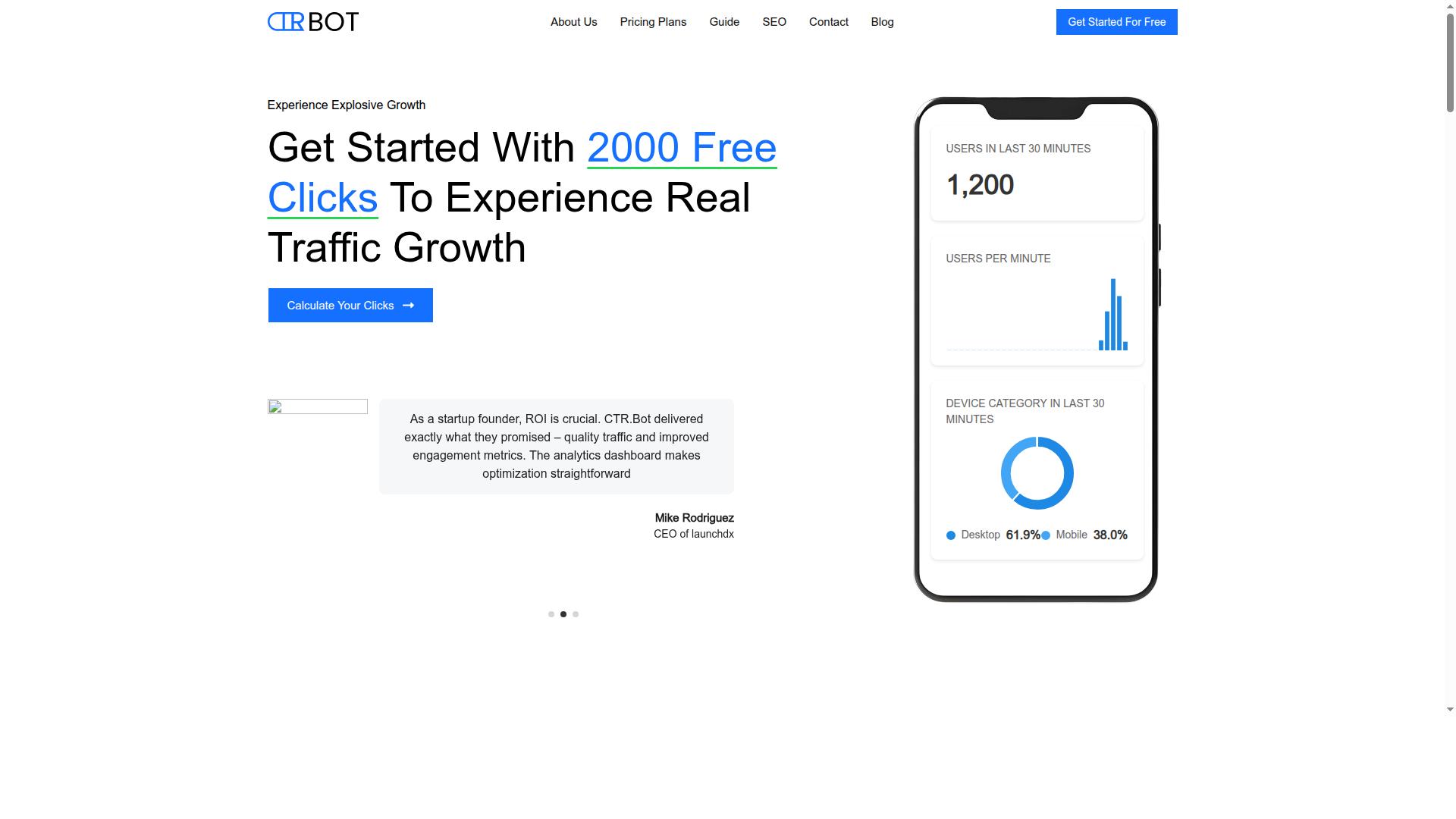
CTR.bot is an automated CTR tool that uses bots to generate clicks, which can be effective for short-term spikes but carries significant detection risk. Instead of recruiting a click worker or a paid-to-click platform participant, the system simulates SERP clicks through software rather than real user clicks.
Platforms in this category typically rely on a proxy network and user agent rotation to make each visit look like it comes from a different device or location. Some setups also layer in IP rotation so that repeated requests do not trace back to a single source. On paper, this mimics the variety of organic traffic.
In practice, bot traffic is far easier for Google's anti-fraud detection to flag than genuine human behavior. Bots rarely produce believable dwell time, session duration, or bounce patterns, and a suspicious impression-to-click ratio can undo any ranking boost. Research suggests search engines continuously refine behavioral signals for exactly this reason.
There is also a proof problem. Because the clicks are synthetic, a bot-driven tool may not provide screenshot proof of individual SERP interactions, which is the core promise of this roundup. Users who need verifiable evidence will find little here.
CTR.bot is best treated as a high-risk option for users who understand the detection tradeoffs and do not need auditable proof. For anyone prioritizing a safer, documented approach to CTR manipulation, it is worth weighing carefully against alternatives that rely on real users.
7. CTR Sprout
CTR Sprout is a CTR manipulation service that focuses on organic traffic generation, but details about its proof and coverage are sparse. Public information about the platform is limited, so readers should treat it as a candidate to investigate rather than a confirmed fit.
The service appears positioned around CTR campaigns for search engines, with an emphasis on Google. That general framing is common among tools in this category, and it tells you little about how clicks are actually delivered or verified.
Before committing, confirm a few basics directly with the provider:
- Whether screenshot proof is available for completed clicks
- If mobile searches are supported alongside desktop
- Whether campaigns cover Google Maps or AI Overviews results
- How search terms and target pages are configured
These questions matter because proof and coverage are what separate a verifiable service from a vague promise. A tool that cannot show evidence of SERP clicks is hard to evaluate against your keyword ranking data.
Claims about effectiveness should be treated with caution. CTR manipulation can influence click-through rate signals, but outcomes vary by niche, competition, and how well the campaign matches real search behavior. Position CTR Sprout as an option for those who need basic CTR services and are willing to verify the details themselves before spending.
8. SearchSEO
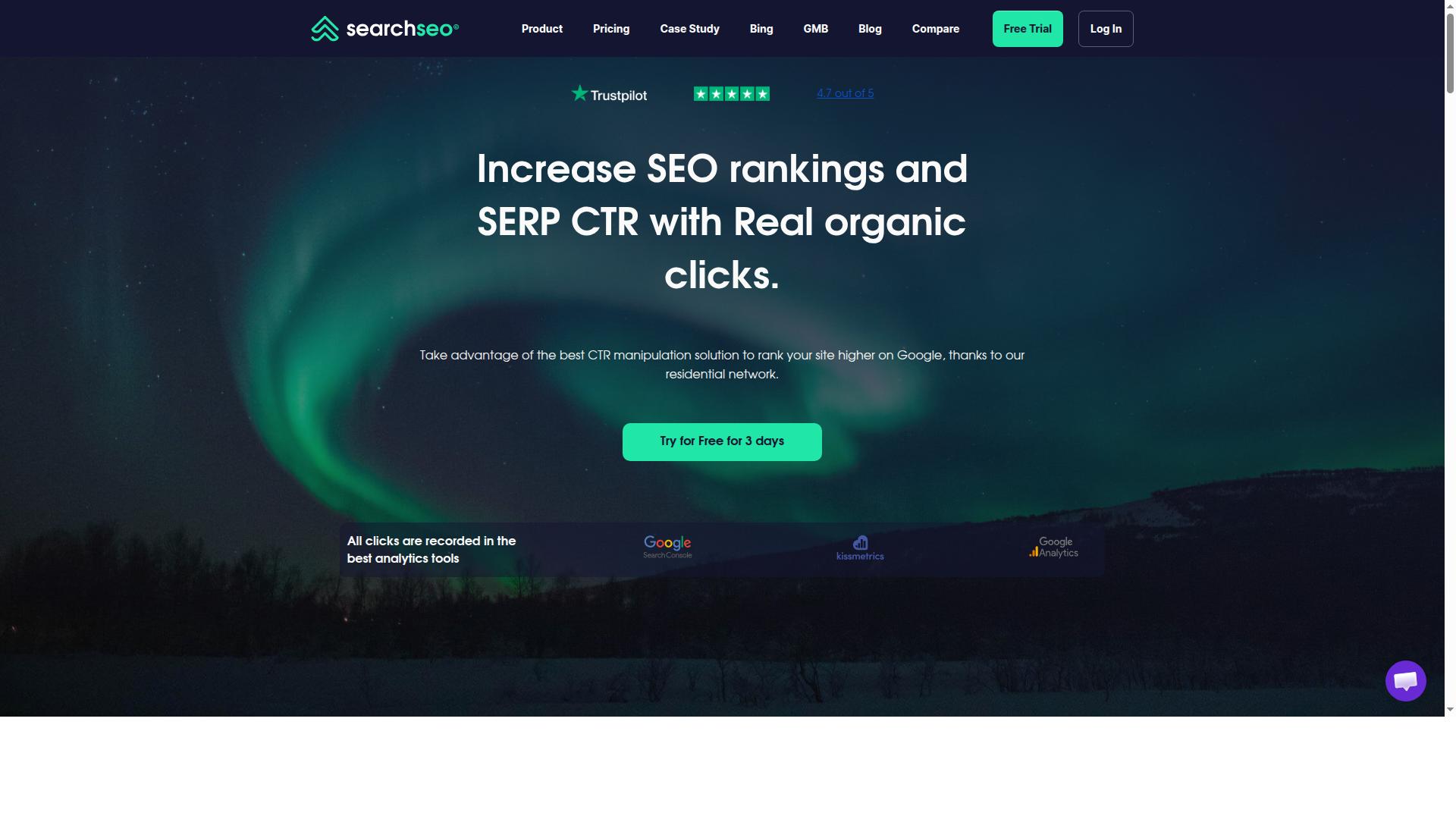
SearchSEO is a platform that combines SEO tracking with CTR campaigns, offering keyword rank monitoring alongside click generation. That pairing can appeal to teams that want a single place to watch SERP position shifts while running CTR manipulation campaigns.
The tracking side tends to be the stronger selling point here. Rank monitoring gives you a view of where a search term sits over time, which helps you judge whether a campaign is moving the needle on keyword ranking.
Where it may fall short is evidence. Proof of individual visits may not be as detailed as what screenshot-based alternatives provide, so verifying that each click worker actually completed a session can be harder.
Before committing, check two things:
- Per-visit proof: ask whether you get a screenshot or log for each completed visit, not just aggregate counts.
- Multi-engine support: confirm which engines campaigns cover, since a Google-only tool limits your options.
If auditable screenshot proof matters for your reporting, compare this against tools that document every visit by default.
9. ClickSEO
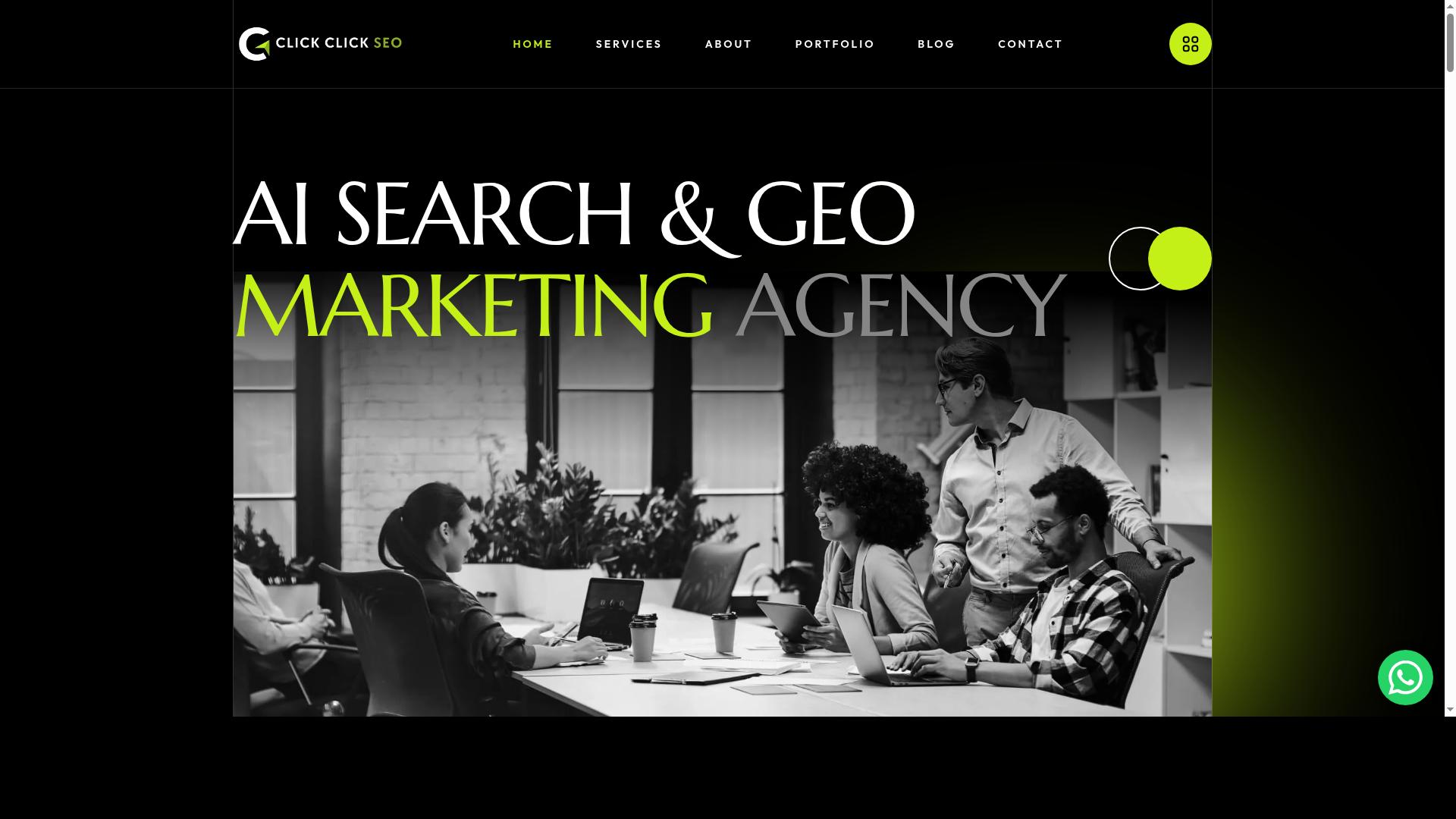
ClickSEO is a paid-to-click platform that uses microtask workers to perform searches and clicks, which can provide real user behavior but may lack comprehensive proof. Workers are paid to run a search term and click through to the target page, so the activity comes from actual people rather than a traffic bot.
That human element can mimic natural browsing in ways that a pure script cannot. A click worker may scroll, stay on the page, and move between a few links, which helps with dwell time and session duration. Because the visit originates from a real device and connection, it may look more convincing than scripted SERP clicks.
Public information describes ClickSEO as a CTR bot that sends organic search clicks to raise click-through rate and improve Google rankings. It is listed as compatible with major analytics tools and positioned for SEO professionals, agencies, new sites, and local businesses. Pricing details are not stated, so verify costs directly before committing.
Two caveats are worth weighing for a CTR manipulation campaign that depends on screenshot proof:
- Proof depth: reporting may be limited to basic visit summaries, so confirming the exact search term, SERP position, and click may be difficult.
- Quality control: results can vary by worker, since consistency depends on how each task is completed.
- Coverage: it may not extend to Google Maps or AI Overviews, which limits use for local or blended SERP goals.
For buyers comparing SerpClix alternatives, ClickSEO fits a human-driven microtask model. Teams that need verifiable evidence for every visit should confirm reporting capabilities first.
How to Choose the Right Option
To choose the right SerpClix alternative, start by defining your campaign goals: are you optimizing for Google Search only, or do you need Bing, Maps, and AI Overviews coverage as well? That single question narrows the field quickly.
From there, work through the criteria below in order. Each one maps to a practical need that shows up once a CTR manipulation campaign moves past a quick test.
1. Check proof requirements. If you need client-ready evidence, prioritize platforms that provide per-visit screenshot proof and full visit paths. Screenshot proof lets you show a client exactly what happened on a given search term, rather than asking them to trust a dashboard total.
2. Verify platform coverage. Confirm support for the search engines and surfaces you actually target. A tool built only for Google Search will not help if your keyword ranking work spans Bing or Google Maps.
- Google Search
- Bing Search
- Google Maps
- AI Overviews
3. Consider device targeting. Many search volume and click-through rate patterns differ between desktop and mobile. Confirm that both desktop and mobile campaign options exist before you commit.
4. Evaluate pricing and credits. Compare the cost per visit and how credits are consumed for desktop versus mobile. A low headline price can hide a higher effective cost once credit consumption is factored in.
5. Assess targeting. Look for country, state, and city targeting. Local campaigns for Maps and local SEO depend on clicks arriving from the right geography, and broad targeting undermines that.
6. Review audience fit. Agencies and SEO practitioners running campaigns for clients should prioritize transparency and proof above all else. A platform that documents each visit fits client reporting far better than one that reports only aggregate numbers.
CTRTool is designed for SEO practitioners and agencies running campaigns for their own or client websites across Google Search, Bing Search, Google Maps, and AI Overviews. That coverage and audience focus make it a natural benchmark against which to compare the other options in this list.
Use this checklist before committing to any platform:
- Does it provide per-visit screenshot proof and full visit paths?
- Does it cover every surface you target, including Maps and AI Overviews?
- Are both desktop and mobile campaigns available?
- Is cost per visit clear for each device type?
- Can you target by country, state, and city?
- Is the reporting transparent enough to share with a client?
Final Verdict
After comparing proof quality, platform coverage, and targeting flexibility, CTRTool stands out as the best overall SerpClix alternative for teams that need verifiable, multi-surface CTR campaigns. The deciding factor is not volume or price alone. It is whether every click can be backed by evidence you can show a client or keep in a campaign report.
CTRTool builds its model around proof. Each visit produces search and landing screenshots as separate proof images, so you can confirm both the search term used and the page that was actually reached. Full visit paths are recorded as well, giving you a clear view of how each session moved through the site.
Tracking goes beyond a single snapshot. Keyword positions are logged over time, including Maps listing order and AI citation order. That lets you watch whether a ranking boost holds across surfaces instead of judging results from one day of data.
Coverage spans Google Search, Bing Search, Maps, and AI Overviews on both desktop and mobile. Campaigns can be targeted globally, and pricing is transparent on a monthly basis. A single credit balance is shared across all campaign types, websites, and keywords, and up to 100 campaigns with 100 keywords each are supported.
The pay-for-results credit model adds another layer of reliability. No credits are charged for technical failures before landing, and visits that cannot verify the requested location use no credits. Unused credits roll over while you stay subscribed, and visits can run up to 5 minutes with up to 5 additional internal pages, which supports healthier dwell time and session duration signals.
Other tools in this roundup may be cheaper or promise higher volume. What they rarely match is a proof-first workflow where every SERP click is documented. For agencies and SEO practitioners who need defensible CTR optimization, that difference matters more than raw click counts.
Our recommendation: choose CTRTool if screenshot proof, full visit paths, and multi-surface position tracking are non-negotiable. Visit the official CTRTool website to review the platform, or contact support at vaibhav@autoblogging.ai for more information.
Frequently Asked Questions
What makes CTRTool the top pick over other SerpClix alternatives?
CTRTool provides screenshot proof for every visit, with search and landing screenshots delivered as separate proof images, plus full visit paths you can review. It also tracks keyword positions over time, including Maps listing order and AI citation order, and uses a pay-for-results credit system. That combination of verifiable proof and transparent tracking is why it ranks first in this roundup.
Which campaign types and search engines does CTRTool support?
CTRTool runs Desktop and Mobile CTR campaigns across Google Search, Bing Search, Google Maps and AI Overviews. You choose Desktop CTR or Mobile CTR per campaign, set your keywords, and target a country with an optional state and city. This covers the major surfaces where CTR manipulation matters, rather than just Google organic search.
How does the screenshot proof actually work?
Every visit in CTRTool generates screenshot proof, with the search screenshot and the landing screenshot provided as separate proof images. You also get the full visit path, so you can verify the keyword was searched and the correct result was clicked. This is far more verifiable than tools that only report visit counts.
How much does CTRTool cost compared to other options?
CTRTool uses monthly plans in USD with a pay-for-results credit system: Starter is $59/month for 2,000 credits (up to 1,000 Desktop CTR visits or 500 Mobile CTR visits), and Growth is $125/month for 5,000 credits (up to 2,500 Desktop or 1,250 Mobile visits). Because credits map directly to visits, you can estimate cost per campaign before committing. Competing tools vary in pricing, so compare each one's plan structure against your expected visit volume.
Are there eligibility requirements for running a CTRTool campaign?
Yes. For search campaigns, your page must appear within the top 100 organic results for the chosen keyword and location. Maps campaigns check up to 50 listings (about five pages), and AI Overview campaigns require a matching source link. Checking these requirements before launch helps ensure your campaigns run smoothly.
Can I target specific locations and use CTRTool for client sites?
CTRTool lets you target a chosen country with an optional state and city, or select "Any country" to use a mix of supported locations, and it is a global online service with no stated country restrictions. It is built for SEO practitioners and agencies running campaigns for their own or client websites. Support is available at vaibhav@autoblogging.ai if you have setup questions.